

More dynamics in distribution grids
Distributed energy resources, flexible demand and growing data volumes are fundamentally reshaping grid operations
BMWE funding under the 8th Energy Research Programme
CloudEnerChain explores how secondary systems, IoT components, cloud platforms and grid control systems can work together securely, transparently and across system boundaries.
At the core is an end-to-end chain of trust from secondary systems through substation and grid control technology to the control room. The goal is to make digital applications in power grids robust, interoperable and ready for operational use

Project rationale
Digital applications in power grids require interoperability, cybersecurity and a clear operational benefit for grid operations
36 months
funding period
7 partners
research, software, grid operations
03EI4113A
BMWE funding
OT, IT, Cloud
secure interfaces across the stack
Context
CloudEnerChain addresses the point where growing data volumes, additional interfaces and rising security requirements converge in power-grid operations.
Distributed energy resources, flexible demand and growing data volumes are fundamentally reshaping grid operations
New digital connections create opportunities for transparency and automation, but they also increase complexity
For digital processes to scale, identity, integrity and security need to be safeguarded along the entire chain
Inside the test environments
These environments represent key levels in power grids, from secondary systems and substation control technology to control rooms and digitally supported operations.

The project focuses on making data flows and digital functions secure, reliable and interoperable across these layers

Connecting the field level
The test hall represents the physical infrastructure of the power grid. It is where the interaction between digital components and existing assets begins
A central question is how operational data can be captured reliably and prepared for further use

Information where it is needed
In the control room, system states, warnings and recommendations need to arrive reliably. This is where digital information has to prove its value in day-to-day operations
That requires trustworthy data and digital applications that support grid operations in a meaningful way

Trying out digital functions safely
Before new digital functions are used in operational contexts, they need to be evaluated in a protected setting. These environments help assess interaction, timing and system behaviour at an early stage
This makes it possible to examine interoperability, security and reliability before later deployment

Visibility at substation level
Digital secondary substations stand for the point where information from the distribution grid is consolidated and transferred into higher-level systems
They stand for the transition from substation data to a shared interoperability layer and operational applications
Image motifs from the testing infrastructures of the Fraunhofer Center for Digital Energy. Source: Fraunhofer Center for Digital Energy, predominantly © Martin Braun. Source: Fraunhofer page
State of the art and novel approach
Secondary systems, substation and grid control technology, interoperability layers and control-room systems are becoming more tightly connected. This increases the need for secure communication, traceable system states and aligned information models across boundaries.
Today’s power grids connect secondary systems, substation and grid control technology, control rooms and increasingly cloud platforms. Communication paths, information models and security mechanisms are often still heterogeneous and only partly aligned
Point solutions such as gateways, firewalls or VPN links can secure individual segments, but they do not yet create a consistent level of trust from the endpoint through the network to the operational application
CloudEnerChain combines a cloud-capable interoperability layer with hardware-backed trust anchors, continuous verification, monitoring and attack detection. This brings interoperability and cybersecurity together in one architecture

What the project is about
The research combines interoperability, security, digital infrastructures and applications for grid operations into one coherent picture.
A shared approach to data and interfaces is meant to connect diverse systems more effectively and strengthen interoperability
Security is not treated as a point solution, but as a principle spanning secondary systems, communication paths and control-centre integration
Digital applications should be placed where they create value while respecting latency, safety and operational requirements
Monitoring, anomaly detection and new digital applications are intended to support day-to-day utility operations in practical ways
From challenge to solution
The starting point is real-world requirements from power grids, existing system landscapes and the growing role of digital connectivity
Building on this, data flows, system boundaries and digital interfaces are framed so that cross-vendor cooperation becomes more feasible
Cybersecurity is embedded as a guiding principle in architecture, communication, monitoring and digital applications
The resulting approaches are assessed in practice-oriented environments to evaluate their suitability for future use in grid operations
Expected contribution
A shared perspective on data models and interfaces can reduce integration effort and improve exchange between systems
End-to-end protection and improved observability strengthen the handling of disruptions and cyber threats
CloudEnerChain aligns digital approaches with existing operational processes, systems and responsibilities
Project consortium
Partners at a glance
The consortium brings together perspectives from research, industry and grid operations

Academic partners contribute expertise in IT security, simulation, data processing and digitally enabled power-grid operations
Technology and software partners connect the project to platforms, interfaces, grid control systems and market-relevant solutions
Grid-operator partners provide real operational requirements, operational knowledge and the perspective of transferability
News
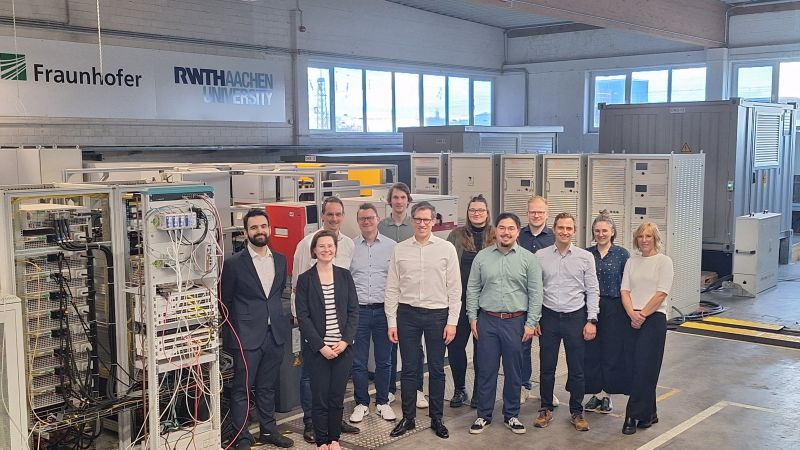
During the kick-off on March 10 and 11, 2026, in Aachen, the consortium aligned on shared goals, practical relevance and the next steps toward secure, interoperable digitalisation in power grids.


